A new lens can feel like a door. Sharper photographs, softer backgrounds, more clients and an easier career seem to be waiting on the other side of the purchase. The hard part is admitting that the door often loops back into the same room.
A New Lens Cannot Do the Practice for You
Better gear can remove a real limitation, but it cannot teach you to sculpt light, read a room or help a nervous guest feel safe. If shutter speed, aperture, ISO and flash still feel uncertain under pressure, another body simply gives that uncertainty a newer shell.
Use the 80-percent test: before upgrading, ask whether you can use your current settings, flash and lenses confidently in most real event conditions. If not, practise the foundation before replacing the tool.
Ask What Actually Changes After the Purchase
The seductive promise is rarely just a sharper photograph. It is more bookings, more confidence and a career that finally starts moving. Ask the uncomfortable question: after buying the lens, what changes on Monday? Does it create a lead, calm a room, improve your judgement or make a client recommend you?
- Name the exact failure your current gear causes.
- Prove that practice or technique cannot solve it first.
- Estimate how often the new capability will matter at paid events.
- Compare the purchase with education, advertising or client-development work.
- Buy only when the tool removes a repeated, measurable limit.
Fund the Things That Travel Between Cameras
Knowledge travels. So do judgement, hospitality and the ability to recover when an event changes shape. Money spent learning accurate exposure, flash, editing, posing and people skills keeps paying when the camera body is old, new, borrowed or replaced.
Before another upgrade: consider whether the same money could deepen your education, create more practice, improve your client experience or place your work in front of people who can hire you.
Gear Comes After the Foundation Can Carry It
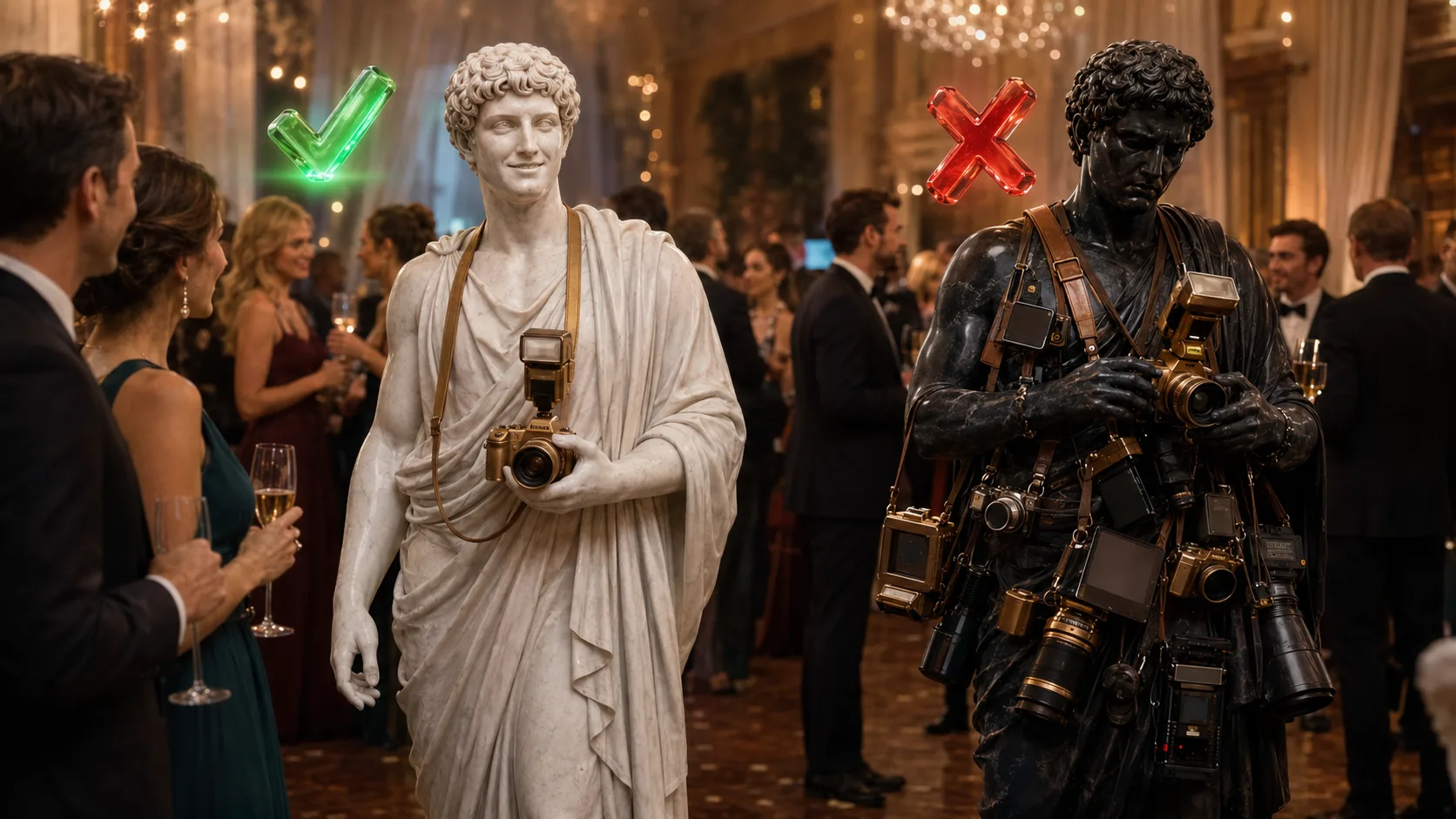
This is not an argument against good equipment. A second body, dependable flash, harness or specialist prime can be excellent purchases once the photographer knows why each tool belongs. The order matters: foundation first, then the smallest upgrade that removes the next real limit.
A camera can help you make a photograph. It cannot build the photographer on its own. Put your early money into the parts of you that compound—then let gear become a tool rather than a promise. For the deeper system behind settings, flash, hospitality and field judgement, continue with Event Photography 101. 📘