Natural light can be beautiful. It can also become a comfortable name for a skill we have not learned yet. At an event, the difference appears the moment the daylight disappears and a client's important memory is still unfolding.
A Style Is Chosen; An Excuse Chooses for You
A portrait photographer can build a clear daytime, natural-light style on purpose. There is nothing wrong with that. Event photography carries a different promise. Baptisms, birthdays, engagements and dance floors move between bright, dark and mixed light without asking what the photographer prefers.
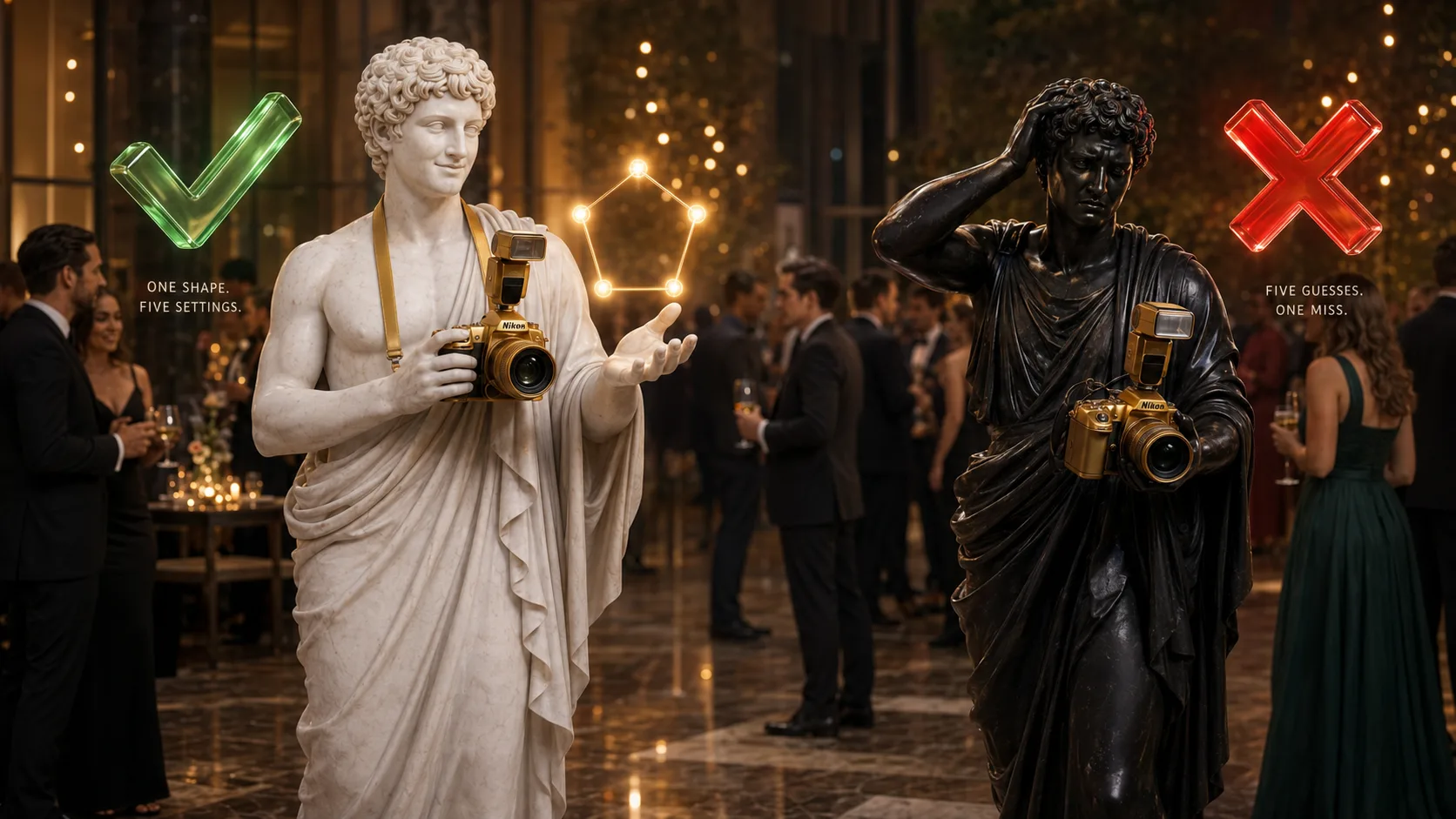
Use this honest test: if the room went dark tonight, could you still illuminate the people and protect the atmosphere? If not, the next step is not a new label. It is basic flash practice.
Flash Gives You Two Exposures to Balance
The simplest flash model is not a forest of settings. It is two exposures living in one photograph: the room and the face. Ambient controls how the environment feels. Flash protects the subject when the room cannot provide enough clean light.
- Use shutter speed to decide how much room light survives.
- Use aperture, distance and flash power to shape the subject exposure.
- Preserve enough ambient light that the event still feels like itself.
- Add only enough flash to give the face correct exposure and accurate colour.
TTL Is a Valid First Rung
You do not need to begin by calculating manual flash power in a dark room under pressure. TTL automatic flash is enough to start. It gives you a usable exposure while you practise bounce direction, distance and how the room responds. Competence grows one repeatable decision at a time.
Beginner action: put the flash in TTL, bounce it from a neutral ceiling or wall, take one test frame and adjust flash compensation—not your identity as a photographer.
The Client's Intention Decides the Light
The point of flash is not to make every room look flashed. The point is to shape the available and artificial light around what the client needs the photograph to communicate. Their people, atmosphere and intention come before the photographer's fear of a tool.
Keep the Hammer in the Kit
Ferdi compares flash to a hammer in a tradesperson's kit. You may not use it for every job, but an event photographer should know what it does when the job requires it. Basic competence protects the client, your confidence and the range of rooms you can accept.
Natural light remains beautiful. Flash simply means darkness no longer decides which moments you are capable of keeping. Learn the room, protect the face, and let both forms of light become ingredients rather than opposing religions. For the complete pressure-tested flash system, continue with Event Photography 101. 📘